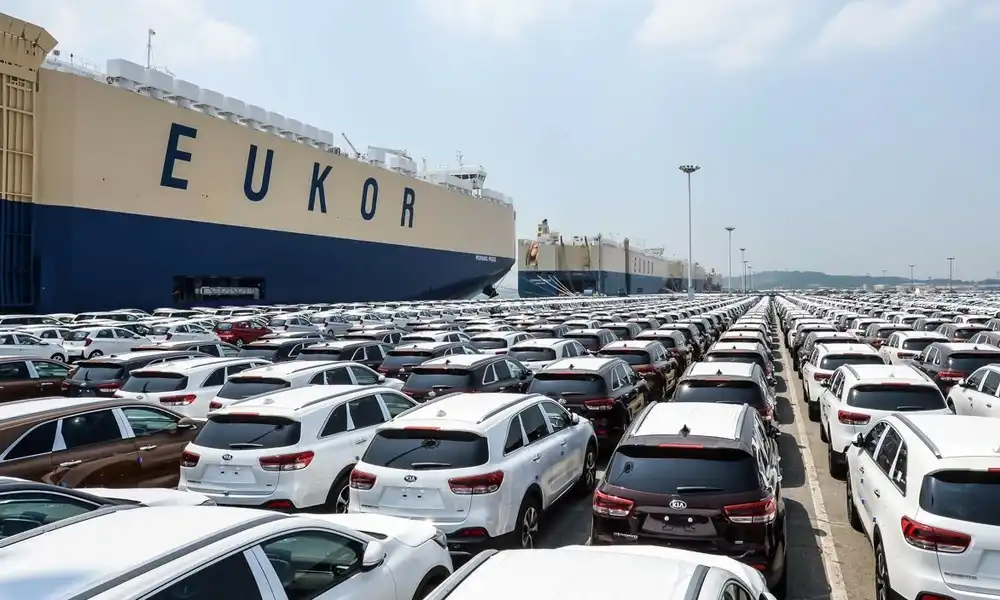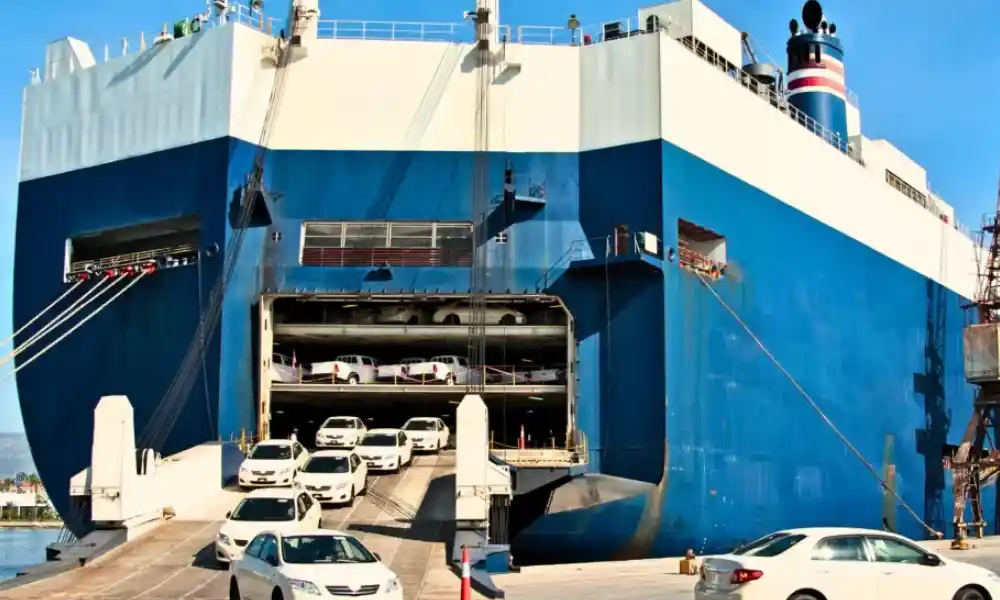
How do you become a Korean used car importer?
UsedCarKorea.com
To become a Korean used car importer, establish your importing business, check destination-country regulations, find reliable Korean used car suppliers, inspect vehicles, calculate the total landed cost, complete Korean export procedures, arrange shipping, clear customs, and register the vehicles locally.
To become a Korean used car importer, you generally need to establish a legal importing business in your destination country, understand your country’s vehicle-import regulations, identify reliable Korean vehicle suppliers, verify each vehicle before purchase, arrange Korean export clearance and international shipping, and calculate the complete landed cost before selling the vehicle.
The important point is that buying a car in Korea is only one part of the business. A successful importer needs a repeatable supply chain covering vehicle sourcing, inspection, documentation, payment, export, shipping, destination customs, local registration, and after-sales support.
On the Korean side, used vehicles intended for export must have their domestic registration cancelled before export, and Korean Customs requires an export declaration. Korean Customs also states that used vehicles are subject to procedures designed to prevent the export of stolen vehicles. Once an export declaration is accepted, loading generally needs to be completed within 30 days.
This makes the business less about finding a cheap vehicle and more about building a reliable import process.
Table of Contents
What Is a Korean Used Car Importer?
A Korean used car importer is a business or individual that purchases vehicles from South Korea and brings them into another country for personal use, resale, fleet operation, or dealership purposes.
The typical international supply chain looks like this:

Korean vehicle supplier → Vehicle inspection → Purchase → Export clearance → Korean port → Ocean shipping → Destination customs → Local compliance → Registration → Retail or wholesale sale
The importer normally takes responsibility for understanding the regulations and costs at the destination.
This distinction is important because Korean export requirements and destination-country import requirements are separate.
A vehicle can be legally exported from Korea but still fail to meet the requirements for registration in the destination country.
Step 1: Choose Your Target Market Before Buying Cars
One of the biggest mistakes new importers make is choosing vehicles first and the market second.
Start with your destination country.
Research:
- Maximum vehicle age
- Engine-size restrictions
- Emissions requirements
- Left-hand-drive or right-hand-drive requirements
- Safety standards
- Import duties
- VAT or sales tax
- Registration fees
- Inspection requirements
- Vehicle homologation
- Restrictions on salvage or accident vehicles
- Required import documents
- Currency and payment requirements
These rules vary substantially between countries.
For example, a vehicle that is commercially attractive in one market may be difficult or expensive to register in another.
A simple example
Suppose a Korean SUV costs:
Vehicle: $15,000
Korean inland transportation: $300
Inspection/documentation: $200
Ocean freight: $1,500
Insurance and port-related costs: $500
Your cost is already approximately $17,500 before destination-country taxes and registration costs.
If you only compare the $15,000 Korean purchase price with local retail prices, you may incorrectly estimate your potential margin.
Step 2: Decide What Type of Import Business You Want
There are several possible business models.
Retail importer
You purchase vehicles from Korea and sell them directly to consumers in your country.
Your margin may come from the difference between total landed cost and retail selling price.
Wholesale importer
You import vehicles and sell them to local dealers.
This model can provide faster inventory turnover but generally requires competitive wholesale pricing.
Dealer sourcing service
Instead of holding large inventory, you source vehicles according to customer specifications.
For example:
“2019–2022 Hyundai Tucson, gasoline, automatic transmission, under 80,000 km.”
You then locate suitable vehicles in Korea and charge a sourcing or service margin.
Fleet or commercial buyer
Some importers specialize in vehicles for taxi companies, rental companies, transportation businesses, or corporate fleets.
The right model depends on local regulations, available capital, demand, and your distribution network.
Step 3: Understand the Korean Used Car Supply Chain
South Korea has several channels through which exporters can source vehicles.
These can include:
- Used-car dealers
- Wholesale markets
- Auction channels
- Export-specialized suppliers
- Dealer networks
- Direct vehicle owners in certain transactions
A professional importer should not assume that every supplier offers the same vehicle condition or documentation.
The supplier’s role should be clearly understood before payment.
Ask:
Who owns the vehicle?
Who performs the inspection?
Who handles export documentation?
Who arranges inland transportation?
Who books the vessel?
Who is responsible if the vehicle condition differs from the agreed specification?
These questions become particularly important when you begin purchasing multiple vehicles.
Step 4: Select Vehicles Based on Market Demand
Don’t simply choose vehicles because they are popular in Korea.
Your customers may want something different.
For example, depending on the destination market, demand may focus on:
- Hyundai Tucson
- Hyundai Santa Fe
- Hyundai Avante/Elantra
- Kia Sportage
- Kia Sorento
- Kia Carnival
- Kia K5
- Genesis models
- Korean hybrid vehicles
- Compact SUVs
- Commercial vehicles
However, popularity alone does not determine profitability.
You should compare:
Korean acquisition price + total import cost + expected selling price
rather than simply asking:
“Which Korean car is popular?”
Step 5: Check the Vehicle Before Paying
Vehicle inspection is one of the most important parts of the importing process.
A professional inspection should verify information such as:
- VIN
- Mileage
- Registration history
- Accident history
- Flood damage
- Engine condition
- Transmission condition
- Exterior condition
- Interior condition
- Tire condition
- Warning lights
- Optional equipment
- Number of keys
- Service history where available
Photographs should cover more than just the attractive exterior.
Request detailed photographs of:
- Dashboard
- Odometer
- Engine compartment
- Tires
- Seats
- Door panels
- Underbody where practical
- Damage areas
- VIN
- Warning indicators
For expensive vehicles, an independent inspection can be worthwhile.
Step 6: Verify Korean Export Documentation
Documentation should be checked before the transaction is finalized.
Korean Customs states that used vehicles must have their registration cancelled before export. It also requires accurate export declarations and can conduct document reviews or inspections.
The exact document package can vary according to the transaction and destination.
Common documents may include:
- Commercial invoice
- Packing list where applicable
- Export declaration documentation
- Vehicle-related registration or cancellation documents
- Bill of lading
- Purchase documentation
- Certificate of origin where applicable
- Other destination-specific documents
Your destination customs authority should confirm which documents are mandatory for import and registration.
Step 7: Understand Korean Export Clearance
The Korean export process involves more than putting a vehicle on a ship.
Korean Customs describes the export process through stages including export declaration, customs review, acceptance, transportation to the loading location, inspection where applicable, and loading.
For used cars, registration cancellation is particularly important.
Korean Customs specifically states that stolen vehicles and used vehicles whose registration has not been cancelled cannot be exported.
This is one reason an importer should work with suppliers familiar with export procedures rather than treating the transaction like a normal domestic used-car purchase.
Step 8: Choose Your Shipping Method
International vehicle shipping generally involves selecting an appropriate logistics method.
Two common options are:
RoRo shipping
RoRo means Roll-on/Roll-off.
Vehicles are driven onto the vessel and secured inside the ship.
It can be practical for standard vehicles when the route and vessel schedule are suitable.
Container shipping
Vehicles are loaded into shipping containers.
This can provide different loading possibilities and may be useful for certain vehicles or combined shipments.
Your logistics provider should explain:
- Port of departure
- Destination port
- Sailing schedule
- Transit time
- Freight rate
- Port charges
- Documentation requirements
- Insurance
- Vehicle loading requirements
Don’t compare shipping quotes using freight price alone. Compare the total logistics cost and services included.
Step 9: Calculate the Total Landed Cost
This is where many inexperienced importers make mistakes.
Your real acquisition cost is not the Korean purchase price.
A useful calculation is:
Landed Cost = Vehicle Price + Korean Costs + Export Costs + Freight + Insurance + Destination Charges + Import Taxes + Registration Costs
Depending on the country, there may also be:
- Customs duty
- VAT/GST
- Excise taxes
- Environmental fees
- Inspection fees
- Port storage
- Customs broker fees
- Local transportation
- Registration fees
Example
Imagine a vehicle is purchased for:
| Cost | Example |
|---|---|
| Vehicle | $15,000 |
| Korean inland transport | $300 |
| Inspection/documentation | $200 |
| Export/logistics costs | $400 |
| Ocean freight | $1,500 |
| Insurance | $100 |
| Destination port/customs | $700 |
| Import taxes | $3,000 |
| Registration/local costs | $500 |
| Estimated landed cost | $21,700 |
These numbers are illustrative only, not a quotation or universal tax calculation.
The actual amount depends on the vehicle, destination country, shipping route, tax system, and applicable regulations.
Step 10: Check Destination-Country Import Regulations
This step should happen before purchasing the vehicle, not after it arrives.
Ask your local customs authority or licensed customs broker:
- Is this vehicle eligible for import?
- Does its age meet the requirement?
- Does it meet emissions standards?
- Is homologation required?
- Are Korean-specification vehicles acceptable?
- What taxes apply?
- What documents are required?
- Is pre-shipment inspection required?
- Are accident or salvage vehicles restricted?
- Can the vehicle be registered after customs clearance?
A Korean exporter cannot answer all of these questions for you because many are determined by the destination country.
Step 11: Build a Reliable Supplier Network
Once you understand the process, your next objective should be supplier diversification.
Instead of relying entirely on one supplier, compare several companies.
Evaluate:
Vehicle quality
Response speed
Documentation accuracy
Inspection process
Export experience
Payment terms
Problem-solving ability
Shipping coordination
Transparency about vehicle history
The goal is not simply to find the cheapest supplier.
The goal is to create a supply chain that produces predictable vehicles, predictable documents, and predictable costs.
Step 12: Start With a Small Shipment
A new importer does not necessarily need to begin with a large inventory.
A smaller first shipment can help you test:
- Supplier reliability
- Vehicle condition
- Shipping process
- Customs clearance
- Tax calculation
- Registration
- Local customer demand
- Actual profit margin
After the first shipment, compare the estimated landed cost with the actual landed cost.
This creates valuable operational data.
For example:
Estimated freight: $1,500
Actual freight and destination charges: $1,850
That $350 difference matters when you are importing 20 vehicles.
Common Mistakes New Korean Used Car Importers Make
Buying Based Only on the Korean Purchase Price
A low purchase price does not automatically create a profitable import.
Always calculate landed cost.
Ignoring Destination Regulations
A vehicle may be exportable from Korea but unsuitable for registration in your country.
Not Checking Vehicle History
Mileage, accident history, flood damage, and previous use can significantly affect resale value.
Paying Before Verifying the Supplier
Confirm the supplier’s company information, transaction terms, documentation, and vehicle details before transferring significant funds.
Underestimating Logistics Costs
Port charges, inland transportation, documentation, storage, and customs-related fees can materially change the final cost.
Scaling Too Quickly
Importing 20 vehicles before understanding the process can multiply a small operational mistake into a major financial problem.
How to Find Korean Used Car Suppliers
International buyers can use several approaches.
One option is to work directly with Korean exporters and dealers.
Another is to participate in business-matching programs.
For example, KOTRA has organized used-car and auto-parts export consultation programs connecting Korean companies with international buyers. Its 2026 programs specifically identify markets including Africa, the Middle East, and Central Asia.
KOTRA also operates buyer-related services and directs import inquiries through its overseas offices and BuyKorea platform.
For a new importer, these types of structured business channels can be useful starting points for identifying legitimate commercial contacts.
What Does It Take to Become a Successful Korean Used Car Importer?
The business requires more than access to inexpensive vehicles.
You need five systems working together:
1. Market knowledge
Know which vehicles your customers actually want.
2. Supplier sourcing
Build relationships with reliable Korean sellers.
3. Vehicle verification
Confirm condition, mileage, history, and specifications.
4. Logistics and customs
Understand export procedures, shipping, destination customs, and registration.
5. Sales and distribution
Know who will buy the vehicles after they arrive.
If one of these systems is weak, the business becomes difficult to scale.
Korean Used Car Importer Checklist
Before your first commercial purchase, make sure you can answer these questions:
- Is my importing business legally established?
- Do I understand my country’s vehicle-import rules?
- Have I confirmed which vehicle types are permitted?
- Have I calculated import taxes?
- Have I found reliable Korean suppliers?
- Can I independently verify vehicle condition?
- Can I verify VIN and vehicle history?
- Do I understand Korean export procedures?
- Is the vehicle registration properly cancelled for export?
- Have I received a complete quotation?
- Have I calculated landed cost?
- Have I compared shipping options?
- Do I know the required destination documents?
- Have I planned local registration?
- Do I have a sales channel after import?
If several answers are still “no,” it is better to resolve those gaps before making a large vehicle purchase.
FAQs

How do I become a Korean used car importer?
To become a Korean used car importer, establish a legal importing business in your destination country, confirm vehicle-import regulations, find a reliable Korean used car supplier, inspect vehicles, calculate landed costs, arrange Korean export procedures, and prepare for customs and registration.
How can I import used cars from Korea?
To import used cars from Korea, first identify vehicles that meet your country’s age, emissions, safety, and registration requirements. Then purchase through a verified Korean supplier, complete vehicle inspection and export documentation, arrange shipping, clear destination customs, and complete local registration.
How do I find a reliable Korean used car supplier?
A reliable Korean used car supplier should be able to provide clear vehicle information, VIN details, inspection records, photographs, purchase documentation, export support, and transparent pricing. International buyers should verify the supplier and agree in writing on vehicle condition, costs, and responsibilities before payment.
What documents are required for Korean used car export?
Documents can vary according to the vehicle and destination country, but Korean used car export transactions commonly involve commercial and vehicle documentation, export declaration records, shipping documents, and destination-specific paperwork. Buyers should confirm the exact requirements with Korean customs/export professionals and their destination customs authority.
How much does it cost to import a used car from Korea?
The cost of importing a Korean used car includes more than the purchase price. Buyers should calculate the vehicle price, Korean inland transportation, inspection and export costs, ocean freight, insurance, destination port charges, customs duties, taxes, registration, and other local expenses to determine the total landed cost.
Final Takeaway
Becoming a Korean used car importer is best approached as a trade and logistics business rather than simply a car-buying business.
The basic process is:
Research your market → Establish your import business → Find Korean suppliers → Select vehicles → Verify condition → Calculate landed cost → Complete Korean export procedures → Ship → Clear destination customs → Register → Sell
The most important discipline is to calculate the complete landed cost before committing to a vehicle.
Korean Customs provides the official framework for export declarations and used-vehicle export procedures, while organizations such as KOTRA provide international business-matching and export-support channels.
For a first-time importer, the safest practical approach is to start with a clearly defined destination market, a small test shipment, documented inspection procedures, and a supplier whose responsibilities are written into the transaction.
Once those systems work reliably, you can gradually increase the number of vehicles and develop a repeatable Korean used-car import business.