Used car prices in South Korea vary by model, year, mileage, trim, and condition. Foreign buyers should compare Encar, K Car, and KB Chachacha, then calculate inspection, export, shipping, customs, taxes, and registration costs before importing a Korean used car.
UsedCarKorea.com
Buying a used car in South Korea as a foreigner can look surprisingly affordable when you first browse Korean used-car platforms. Hyundai, Kia, Genesis, and other vehicles can often be found at competitive prices compared with equivalent vehicles in other markets.
However, the price you see on a Korean used-car website is not necessarily the final cost of importing the vehicle into your country.
For an overseas buyer, the real calculation includes the Korean vehicle price, inspection, dealer or export fees, deregistration, inland transportation, port charges, shipping, insurance, customs duties, taxes, and local registration.
This guide explains used car prices in South Korea for foreigners, where to find Korean used cars, how Encar, K Car, and KB Chachacha differ, and what international buyers should know before exporting a vehicle from Korea.
Table of Contents

Are Used Cars Cheap in South Korea?
South Korea has a large and highly developed domestic used-car market, with thousands of vehicles listed through major platforms.
In 2026, prices vary significantly according to the vehicle’s:

- Brand and model
- Model year
- Mileage
- Accident history
- Trim level
- Engine and fuel type
- Options
- Vehicle condition
- Number of previous owners
- Domestic demand
- Export demand
Recent market data illustrates how quickly prices can change.
For example, Encar reported that prices for 37 popular 2023 model-year vehicles fell by an average of 3.98% month over month in June 2026, with domestic vehicles down 3.88% and imported vehicles down 4.12%.
At the same time, another analysis of actual transactions found that the average Korean used-car transaction price during the first half of 2026 was approximately ₩10.66 million, up from ₩8.22 million in the same period of 2025.
This illustrates an important point:
There is no single “average price” for a used car in Korea.
Prices can move significantly depending on vehicle type, model, mileage, and market demand.
Typical Used Car Prices in South Korea
For international buyers, it is often more useful to think in broad price categories rather than expect one fixed national average.
| Vehicle category | Approximate Korean market range |
|---|---|
| Older compact cars | ₩3–8 million |
| Older Hyundai/Kia sedans | ₩5–12 million |
| Recent compact/small cars | ₩10–20 million |
| Mid-size sedans | ₩10–25 million |
| SUVs | ₩12–35 million+ |
| Premium vehicles | ₩20–60 million+ |
| Recent hybrids/EVs | ₩15–50 million+ |
These are illustrative market ranges, not fixed 2026 prices. A specific vehicle can be substantially cheaper or more expensive depending on mileage, accident history, options, condition, and supply.
For example, current Korean listings can show significant differences even among vehicles of the same model. KB Chachacha provides an AI-based market-price service using transaction data and allows buyers to compare estimated market values and appropriate price ranges.
The safest approach is therefore to research the exact model, year, trim, mileage, and accident history rather than relying on a general average.
Encar vs K Car vs KB Chachacha
Three names frequently appear when searching for used cars in Korea:
Encar, K Car, and KB Chachacha.
They are not identical services.
1. Encar
Encar is one of the most widely used Korean used-car marketplaces.
One of its biggest advantages is selection.
Buyers can compare a large number of vehicles by:
- Manufacturer
- Model
- Year
- Price
- Mileage
- Fuel
- Location
- Accident history
- Options
Encar also provides a vehicle valuation function that considers factors such as model, accident history, mileage, color, options, model year, and region.
For an international buyer, Encar can be useful for understanding the Korean market price before contacting an exporter or dealer.
However, a listing price should not automatically be interpreted as an export-ready price.
2. K Car
K Car takes a different approach from a large open marketplace.
K Car is particularly known for its directly managed used-car inventory.
This can make the buying process easier for consumers who prioritize standardized processes and vehicle management rather than simply finding the absolute lowest listing price.
For foreigners, the important question is whether the specific K Car vehicle can be purchased and exported through an appropriate export arrangement.
In other words, don’t assume that being able to see a vehicle online automatically means that the platform itself will handle international export.
3. KB Chachacha
KB Chachacha is another major Korean used-car platform.
One useful feature is its AI market-price information, which uses transaction data to estimate market values and appropriate price ranges.
This can be particularly helpful when negotiating.
Suppose you find a Hyundai Sonata listed for ₩18 million.
Rather than asking only:
“Is ₩18 million cheap?”
You can ask:
“How does ₩18 million compare with similar vehicles based on year, mileage, trim, and condition?”
That is a much better way to evaluate a used car.
Which Korean Used-Car Platform Is Best?
There is no universal winner.
Encar is particularly useful if you want a broad selection and extensive price comparison.
K Car can be attractive if you prefer directly managed inventory and a more standardized buying experience.
KB Chachacha is useful for comparing listings and checking market-price information.
For an overseas buyer, I would not recommend choosing just one.
Instead, search all three platforms.
Find the same model on each platform and compare:
Year + Trim + Mileage + Accident History + Price + Options
This gives you a much more realistic picture of the Korean market.
Example: How to Research a Korean Used Car
Imagine you want to buy a 2022 Hyundai Tucson.
Instead of searching:
“Cheap Hyundai Tucson Korea”
search for:
2022 Hyundai Tucson 1.6 Turbo
2022 Hyundai Tucson Hybrid
2022 Hyundai Tucson 50,000 km
2022 Hyundai Tucson no accident
Then compare multiple listings.
Pay particular attention to mileage.
A ₩17 million Tucson with 100,000 km isn’t necessarily a better deal than a ₩19 million vehicle with 45,000 km.
Likewise, a low-mileage vehicle with a serious accident history may be less attractive than a higher-mileage vehicle with a clean history.
What Foreigners Should Know About Korean Used-Car Prices
The biggest mistake international buyers make is confusing the Korean purchase price with the landed import cost.
Suppose a Korean used car costs:
₩15,000,000
That does not mean you will spend only ₩15 million.
Your actual cost could include:
**Vehicle price
- inspection
- export documentation
- deregistration
- domestic transportation
- port handling
- shipping
- marine insurance
- destination customs duty
- VAT/GST or other taxes
- local compliance
- registration**
Depending on the destination country, these additional costs can be substantial.
Therefore, a car that looks extremely cheap on a Korean website may not necessarily be the cheapest option after import.
Can a Foreigner Buy a Used Car in Korea for Export?
Potentially, yes—but the process is different from simply buying a car for personal use inside Korea.
If the vehicle is being exported, the transaction needs to follow Korean export and customs procedures.
According to Korea Customs Service, used cars intended for export must have their domestic registration cancelled before export. Vehicles that are stolen or have not had their registration cancelled cannot be exported.
Korean Customs also requires an export declaration and may conduct document review or inspection during export clearance.
This is one reason international buyers often work with a Korean used-car exporter or export specialist rather than trying to handle every step themselves.
Korean Used Car Export Process
The process generally looks like this:
Step 1: Find the Vehicle
Search Encar, K Car, KB Chachacha, dealer inventory, or an exporter’s inventory.
Step 2: Verify the Vehicle
Check:
- VIN
- Mileage
- Accident history
- Insurance history
- Ownership history
- Maintenance records
- Vehicle registration information
- Photos
- Optional equipment
Step 3: Conduct an Inspection
For overseas purchases, an independent inspection can be especially valuable.
You don’t want to discover a mechanical problem after the vehicle has already left Korea.
Step 4: Agree on the Purchase Price
Make sure you understand exactly what the quoted price includes.
Ask whether the price includes:
- Dealer margin
- Export handling
- Documentation
- Transportation
- Port fees
- Inspection
- Shipping
Step 5: Deregistration
The vehicle’s Korean registration must be cancelled for export.
Korea Customs specifically states that used vehicles must undergo cancellation of registration before export.
Step 6: Export Declaration
The exporter files the necessary customs declaration.
Korea Customs states that accurate information must be declared and that false declarations or exporting without the required declaration can result in penalties.
Step 7: Shipping
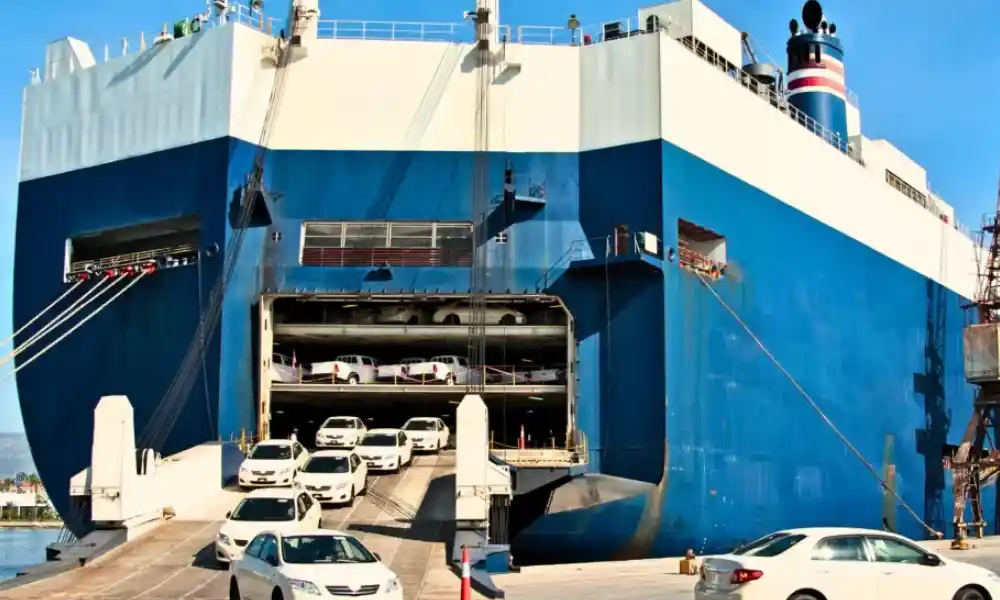
The vehicle can then be transported to the destination country through an appropriate shipping method.
Depending on the destination and vehicle, this may involve:
- RoRo shipping
- Container shipping
Step 8: Import Clearance
Once the vehicle arrives, the destination country’s customs authority determines the applicable duties, taxes, documentation, and compliance requirements.
This part varies significantly from country to country.
How Much Does It Cost to Export a Used Car From Korea?
There isn’t one universal export fee.
The total depends on the destination and shipping method.
A practical calculation is:
Total Import Cost = Vehicle Price + Korean Export Costs + Shipping + Destination Taxes + Local Registration
For example:
| Cost | Example |
|---|---|
| Korean vehicle | ₩15,000,000 |
| Inspection/documentation | Variable |
| Domestic transport | Variable |
| Port/export charges | Variable |
| Ocean shipping | Variable |
| Insurance | Variable |
| Import duty | Country-specific |
| VAT/GST | Country-specific |
| Registration | Country-specific |
The key takeaway is that you should calculate the total landed cost before paying a deposit.
Why Korean Used Cars Are Attractive to International Buyers
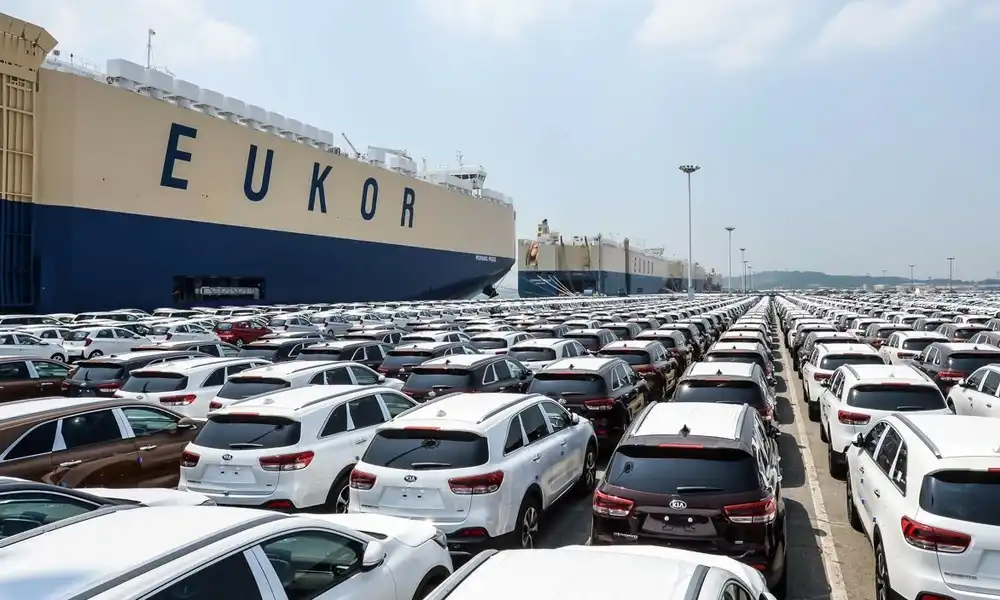
South Korea has become a significant used-car export market.
In the first half of 2025, Korean used-car exports reportedly reached approximately 437,151 vehicles, with exports valued at about $3.9 billion, according to Reuters citing industry and government data.
Korean vehicles are particularly attractive in markets where Hyundai and Kia have strong reputations.
Popular export models can include:
- Hyundai Avante / Elantra
- Hyundai Sonata
- Hyundai Grandeur / Azera
- Hyundai Tucson
- Hyundai Santa Fe
- Kia K3 / Forte
- Kia K5 / Optima
- Kia Sportage
- Kia Sorento
- Kia Carnival
- Genesis G80
- Genesis G90
Availability and export suitability depend heavily on the destination country’s regulations.
Why the Cheapest Korean Used Car May Not Be the Best
Price is important, but international buyers should avoid making the cheapest listing the automatic choice.
A suspiciously cheap vehicle could have:
- High mileage
- Previous accident damage
- Flood damage
- Mechanical problems
- Poor maintenance
- Unpopular specifications
- Difficult-to-source parts
- Export restrictions
- Expensive shipping or import costs
A better strategy is to search for the best value, not simply the lowest price.
A ₩20 million vehicle in excellent condition may ultimately be a better purchase than a ₩16 million vehicle requiring ₩5 million in repairs.
Accident History Is Extremely Important
When comparing Korean used cars, accident history should be one of your first checks.
Don’t rely only on:
“No Accident”
Ask for supporting documentation.
You should verify:
- Insurance claims
- Structural repairs
- Replacement panels
- Frame damage
- Flood history
- Major mechanical repairs
- Previous rental use
- Commercial use
This is especially important for overseas buyers because returning the vehicle to Korea after export can be complicated and expensive.
Mileage Matters, But It Isn’t Everything
Mileage is another important factor.
A car with 40,000 km may appear more attractive than one with 90,000 km.
But mileage should be evaluated alongside:
Age + maintenance + accident history + engine condition + transmission + usage
For example, a properly maintained 90,000 km vehicle may be preferable to a poorly maintained 40,000 km vehicle.
Look at the entire vehicle history rather than one number.
How to Avoid Overpaying for a Korean Used Car
One of the best strategies is to compare several similar vehicles.
For example, if you want a 2021 Kia Sorento, don’t compare only two listings.
Look at 10–20 similar vehicles where possible.
Record:
- Year
- Mileage
- Trim
- Fuel
- Accident history
- Options
- Seller
- Location
- Price
Then identify where your target vehicle sits within the market.
Platforms such as KB Chachacha provide market-price tools, while Encar provides pricing information based on vehicle characteristics and comparable market data.
Is Buying From a Korean Dealer Better Than Buying Privately?
For international buyers, professional sellers or exporters can offer advantages.
A private transaction may sometimes produce a lower purchase price, but international buyers can face additional difficulties with:
- Language
- Payment
- Documentation
- Vehicle inspection
- Deregistration
- Export declaration
- Shipping
- Refunds
- Disputes
A professional exporter can potentially coordinate multiple steps.
However, buyers should still verify the exporter independently.
Never assume that a company is trustworthy simply because it has a professional-looking website or social media page.
What Documents Should You Request?
Before sending money, request documentation relevant to the vehicle and export transaction.
Depending on the transaction, this may include:
- Vehicle registration information
- VIN
- Purchase invoice
- Export-related documents
- Accident/history information
- Inspection report
- Deregistration documentation
- Shipping documentation
- Commercial invoice
- Bill of lading after shipment
The exact documents vary according to the transaction and destination country.
Don’t Forget Your Country’s Import Rules
This is perhaps the most important part of the entire process.
A Korean vehicle that can legally be exported from Korea may not automatically be legal to register in your country.
Before purchasing, check your country’s rules for:
- Vehicle age
- Emissions
- Safety standards
- Left-hand/right-hand drive
- Engine size
- Lighting requirements
- Certification
- Import duties
- VAT/GST
- Environmental fees
- Registration requirements
For some countries, a vehicle that is inexpensive in Korea can become expensive after compliance modifications and taxes.
Always check the destination country’s rules before purchasing the vehicle.
Used Car Prices in Korea vs Final Import Price
Think of the Korean listing price as the starting point, not the final price.
For example:
Korean listing: ₩15 million
↓
Inspection + purchase + export processing
↓
Domestic transportation
↓
Port and shipping
↓
Destination customs
↓
Taxes
↓
Compliance
↓
Registration
↓
Final landed cost
This is the number that matters.
A smart international buyer therefore asks:
“How much will this car cost me after it arrives and becomes legally usable in my country?”
rather than:
“How cheap is this car in Korea?”
Best Korean Used-Car Platform for Foreign Buyers
If you’re researching Korean used cars from outside Korea, there is no need to limit yourself to one platform.
Best for selection: Encar
Useful for discovering a large number of vehicles and understanding market prices.
Best for directly managed inventory: K Car
Useful for buyers who value a more standardized vehicle purchasing process.
Best for market-price comparison: KB Chachacha
Useful for comparing listings and checking estimated market values.
Best overall strategy: Compare all three
Search the same model across Encar + K Car + KB Chachacha.
Then compare the exact vehicle specifications.
This approach is much more reliable than assuming one platform always has the cheapest car.
Final Checklist for Foreigners Buying a Used Car in Korea
Before paying for a Korean used car, confirm:
☐ Exact vehicle price
☐ VIN
☐ Model year
☐ Mileage
☐ Accident history
☐ Insurance history
☐ Maintenance history
☐ Vehicle inspection
☐ Seller identity
☐ Export eligibility
☐ Registration cancellation process
☐ Export declaration
☐ Korean domestic transportation
☐ Port fees
☐ Shipping cost
☐ Marine insurance
☐ Destination-country import duty
☐ VAT/GST
☐ Compliance requirements
☐ Local registration cost
If you cannot calculate these costs, you don’t yet know the true price of the vehicle.
Conclusion: Are Korean Used Cars Worth Importing?
For many international buyers, Korean used cars can offer attractive value, particularly for Hyundai, Kia, and Genesis models.
The country’s large domestic used-car market gives buyers access to extensive vehicle information and a wide range of prices. Korean used-car exports have also grown substantially, demonstrating strong international demand.
But buying successfully requires more than finding a cheap listing.
The best approach is to:
Compare Encar, K Car, and KB Chachacha → verify the vehicle → inspect it → calculate export and shipping costs → check your country’s import regulations → calculate the final landed cost.
If the final number still represents good value compared with buying a similar vehicle locally, importing from Korea may make financial sense.
For international buyers, the cheapest Korean used car isn’t necessarily the best deal. The best deal is the vehicle with the strongest combination of price, condition, history, exportability, and total landed cost.
FAQs

How much do used cars cost in South Korea?
Used car prices in South Korea vary widely by model, year, mileage, trim, and condition. Older compact cars may start around ₩3–8 million, while newer SUVs, hybrids, and premium vehicles can cost ₩20–60 million or more.
Can foreigners buy used cars in South Korea for export?
Yes. Foreign buyers can purchase Korean used cars for export, but the vehicle must meet Korean export procedures and the import requirements of the destination country. Registration cancellation and export customs procedures are required.
What is the best Korean used-car platform for foreigners?
Encar is particularly useful for its large selection, K Car is known for directly managed vehicles, and KB Chachacha offers useful market-price information. Comparing all three can help buyers find better value.
Is it cheaper to import a used car from Korea?
It can be, but the Korean listing price is only the starting cost. Shipping, export fees, customs duties, VAT/GST, compliance costs, and local registration can significantly increase the final price.
What should foreigners check before buying a Korean used car?
Check the VIN, mileage, accident and insurance history, maintenance records, vehicle condition, seller information, export eligibility, shipping costs, and destination-country import regulations before making payment.