
How will an Iran peace agreement affect used car ocean freight costs?
UsedCarKorea.com
A formal Iran peace agreement could reduce used car ocean freight costs by lowering war-risk insurance premiums, improving shipping route stability, increasing vessel availability, and reducing logistics uncertainty. Industry forecasts suggest freight-related expenses may decline by approximately 5% to 12% over the following 6 to 24 months, although actual rates will also depend on fuel prices, shipping capacity, and global vehicle demand.
The conclusion of a formal Iran war end-of-war agreement would likely reduce geopolitical risk premiums across major shipping routes connecting Asia, the Middle East, Europe, and parts of Africa. As a result, used car ocean freight costs are expected to stabilize or moderately decline over the following 6–24 months, assuming no major disruptions occur elsewhere in global trade.
However, freight rates will not automatically return to pre-conflict levels. Ocean transportation pricing depends on multiple factors, including fuel costs, vessel availability, insurance premiums, port congestion, container and RoRo (Roll-on/Roll-off) capacity, exchange rates, and global vehicle demand.
Most industry analysts would expect the largest immediate impact to occur in maritime insurance costs and shipping risk surcharges rather than in base freight rates themselves.
Table of Contents

Understanding Used Car Ocean Freight Costs
Used car ocean freight costs refer to the total expense required to transport a vehicle internationally by sea. The cost generally includes:
- Ocean freight charges
- Port handling fees
- Terminal charges
- Documentation fees
- Marine insurance
- Security surcharges
- Fuel adjustment factors
- Customs-related processing costs
For used vehicle exports, the most common shipping methods include:
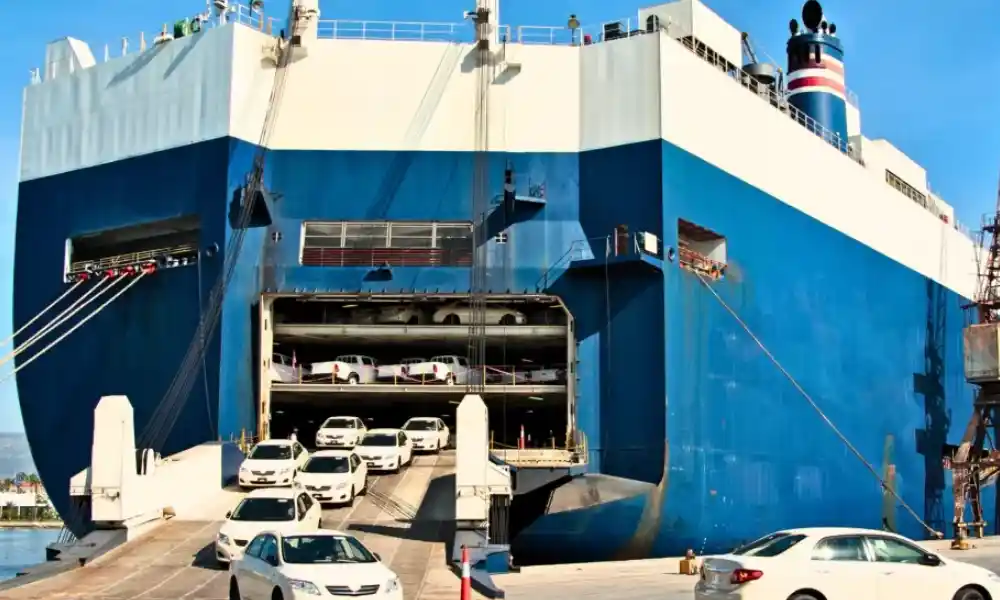
RoRo Shipping
Vehicles are driven directly onto specialized vessels.

Advantages:
- Lower handling costs
- Faster loading procedures
- Reduced damage risk
- Typically lower cost for standard vehicles
Container Shipping
Vehicles are loaded into shipping containers.
Advantages:
- Better protection
- Suitable for luxury vehicles
- Useful for inland destination markets
- Ability to ship parts and accessories together
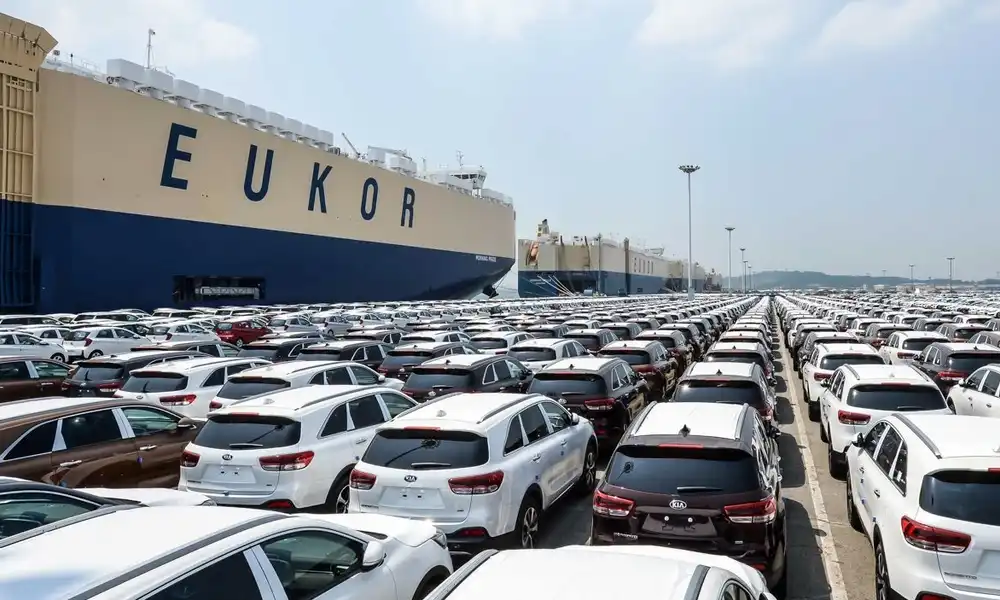
Because RoRo shipping dominates the global used-car trade, any geopolitical event affecting major shipping lanes can significantly influence transportation costs.
Why the Iran Conflict Affects Global Vehicle Shipping
The strategic importance of Iran stems largely from its proximity to the Strait of Hormuz.
The Strait of Hormuz handles a substantial portion of global energy exports and remains one of the world’s most important maritime chokepoints.
When military tensions increase in the region, shipping companies often face:
- Higher war-risk insurance premiums
- Additional security requirements
- Route diversions
- Longer voyage times
- Increased fuel consumption
- Crew safety concerns
These factors raise transportation expenses not only for oil shipments but also for vehicle carriers and container vessels.
How an End-of-War Agreement Could Influence Freight Rates
1. Reduction in War-Risk Insurance Premiums
One of the fastest market reactions following a credible peace agreement would likely be a decline in marine insurance costs.
During conflict periods, insurers often impose:
- War-risk surcharges
- Additional vessel coverage requirements
- Special route assessments
If insurers determine that maritime risks have decreased, exporters of used vehicles may see lower insurance-related expenses within weeks or months.
Expected Impact
Estimated reduction:
- 5% to 15% of total shipping-related costs in affected routes
This does not mean freight rates will fall by the same percentage, but overall transportation expenses could decline.
2. Improved Vessel Availability
During periods of conflict, some carriers avoid higher-risk regions.
Following a peace agreement:
- More shipping lines may return to affected routes.
- RoRo operators could increase capacity.
- Vessel scheduling becomes more predictable.
Greater competition among shipping providers generally creates downward pressure on freight prices.
Expected Impact
Possible freight reduction:
- 3% to 10%
Depending on route and carrier capacity.
3. Lower Fuel Market Volatility
Oil prices often react strongly to Middle Eastern geopolitical events.
An end-of-war agreement may:
- Reduce speculative energy-market pressure.
- Stabilize bunker fuel prices.
- Improve cost forecasting for shipping operators.
Fuel represents a major operating expense for vessel owners.
When fuel costs stabilize, shipping companies are less likely to apply emergency surcharges.
4. Restoration of Trade Confidence
Global logistics markets depend heavily on confidence.
Importers, exporters, banks, insurers, and shipping companies tend to increase activity when geopolitical uncertainty declines.
As confidence returns:
- Vehicle exports may increase.
- Shipping networks may expand.
- Financing becomes easier.
- Logistics planning improves.
This creates greater efficiency throughout the supply chain.
Potential Counterforces That Could Keep Freight Rates Elevated
While peace can reduce costs, several factors could limit price declines.
Global Vehicle Demand
Used vehicle exports remain strong in many regions including:
- Africa
- Central Asia
- Latin America
- Eastern Europe
If demand rises faster than shipping capacity, freight rates may remain elevated despite improved geopolitical conditions.
Vessel Capacity Constraints
The global RoRo fleet is relatively limited.
Building new car carriers requires:
- Significant capital investment
- Shipyard capacity
- Multi-year construction timelines
Even if demand increases, shipping capacity cannot expand immediately.
Port Congestion
Port bottlenecks remain a major determinant of freight pricing.
Congestion can occur due to:
- Labor shortages
- Customs delays
- Infrastructure limitations
- Seasonal demand spikes
Peace in one region does not eliminate operational inefficiencies elsewhere.
Environmental Regulations
New emissions regulations continue to affect shipping economics.
Shipping companies increasingly invest in:
- Cleaner fuels
- Carbon reduction technologies
- Alternative propulsion systems
These investments may offset some savings generated by geopolitical stability.
Freight Cost Forecast Scenarios (2026–2028)
The following scenarios assume a formal and widely recognized Iran war end-of-war agreement.
| Scenario | Market Conditions | Expected Freight Trend |
|---|---|---|
| Optimistic | Stable peace, lower insurance costs, strong vessel availability | 10–20% decline |
| Base Case | Reduced tensions, moderate market recovery | 5–12% decline |
| Neutral | Peace achieved but global demand remains strong | 0–5% decline |
| Pessimistic | Other geopolitical disruptions emerge | Rates remain unchanged or rise |
The base-case scenario currently appears most realistic from a shipping economics perspective.
Impact on Major Used Car Export Markets
South Korea
South Korea remains one of the world’s most important used-car export hubs.
A reduction in Middle East shipping risk could benefit exports from major ports including:
- Incheon
- Pyeongtaek
- Busan
Exporters serving Gulf, African, and Central Asian markets may experience lower transportation costs.
Japan
Japan is one of the largest suppliers of used vehicles globally.
Lower maritime risk may improve profitability for exporters shipping to:
- United Arab Emirates
- Saudi Arabia
- Oman
- East Africa
Europe
European exporters may benefit from improved shipping efficiency through Mediterranean and Middle Eastern trade corridors.
Real-World Example
Consider a used SUV exported from South Korea to East Africa.
During a conflict period:
- Freight charge: $1,500
- Insurance and risk surcharges: $250
- Total shipping-related cost: $1,750
Following a successful peace agreement:
- Freight charge declines to $1,400
- Insurance surcharge drops to $100
- Total shipping-related cost becomes $1,500
This example represents a reduction of approximately 14%.
Actual outcomes vary depending on route, vessel availability, and market demand.
What Vehicle Exporters Should Monitor
Rather than focusing solely on political announcements, exporters should track:
Maritime Insurance Rates
Often the earliest indicator of changing shipping conditions.
Oil Prices
Fuel costs directly affect vessel operating expenses.
RoRo Capacity
Availability of vehicle carrier space strongly influences pricing.
Port Throughput Data
Improved port efficiency often reduces logistics costs.
Shipping Line Announcements
Carriers frequently adjust surcharges based on geopolitical developments.
Monitoring these indicators provides a more accurate forecast than relying on headline news alone.
FAQs
Will used car shipping costs drop immediately after an Iran peace agreement?
Not necessarily. Insurance surcharges may decline relatively quickly, but freight rates usually take several months to adjust as shipping companies rebalance vessel capacity and route planning.
Why does the Iran conflict affect global vehicle shipping?
Iran’s location near the Strait of Hormuz makes it strategically important for global maritime trade. Increased regional tensions can raise insurance costs, security expenses, and shipping risks for vessels transporting vehicles.
How much could used car ocean freight costs decrease?
Under a stable post-conflict environment, industry analysts estimate freight-related costs could decline by approximately 5% to 12%, with larger reductions possible if fuel prices and insurance premiums also fall.
Which countries could benefit most from lower shipping costs?
Major used vehicle exporters such as South Korea, Japan, and European countries may benefit from improved shipping conditions and reduced transportation expenses.
What factors could prevent freight rates from falling?
Strong global demand for used vehicles, limited RoRo vessel capacity, port congestion, environmental regulations, and rising fuel costs could offset the cost-saving effects of a peace agreement.
Conclusion
A credible Iran war end-of-war agreement would likely create a more favorable environment for international vehicle shipping by reducing maritime risk, lowering insurance premiums, improving vessel availability, and stabilizing fuel markets. The most probable outcome is a moderate decline in used car ocean freight costs rather than a dramatic collapse in rates.
For exporters, importers, and logistics providers, the key variables to monitor are marine insurance pricing, RoRo vessel capacity, oil market trends, and port efficiency. Under the most realistic 2026–2028 scenario, used car ocean freight costs could decline approximately 5% to 12%, with larger reductions possible if global trade conditions remain stable and shipping capacity expands.