To import wholesale clearance products from Korea, verify suppliers, review compliance rules, secure export documents, choose the right Incoterms, and work with a reliable freight forwarder. This ensures smooth customs clearance, accurate cost planning, and profitable importing.
UsedCarKorea.com
Importing wholesale clearance products from Korea offers global buyers a high-margin opportunity to source quality goods at discounted rates. This guide explains every step—from supplier selection to customs clearance—so you can confidently import Korean clearance products while reducing risk and maximizing profitability.
Importing wholesale clearance products from Korea has become one of the fastest-growing opportunities for international resellers, Amazon FBA sellers, eCommerce brands, and retail distributors. Korea’s manufacturing standards, trend-driven product categories, and steady cycle of seasonal overstock make it a goldmine for clearance buyers—if you know how to navigate suppliers, compliance, export paperwork, Incoterms, freight, and customs.
This guide delivers a step-by-step, deeply optimized breakdown to help you import successfully while minimizing risk and maximizing profit.
Table of Contents
Why Korea Is a Strong Source for Wholesale Clearance Products
Korea consistently produces high-quality goods with strong export standards, so even clearance or liquidation stock is often in excellent condition. These products become available when:
- Retailers rotate seasonal or fashion-cycle inventory
- Manufacturers clear slow-moving SKUs
- Brands discontinue packaging or previous versions
- Department stores liquidate customer returns or excess stock
- Export warehouses offload mixed lots at bulk discounts
Top categories include:
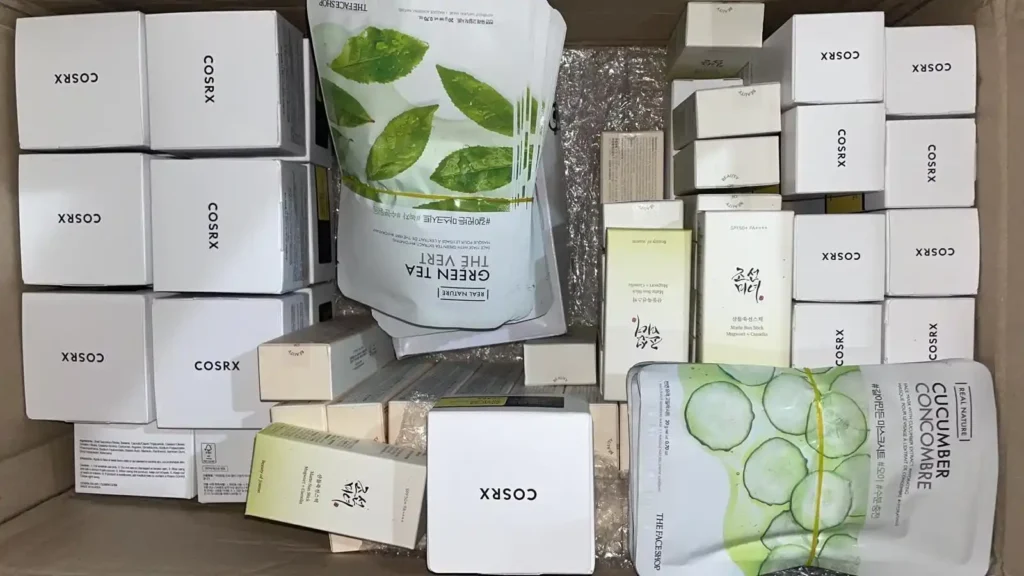
- Cosmetics, skincare, and beauty tools
- Apparel and accessories
- K-fashion stock lots
- Electronics accessories
- Lifestyle and home goods
- Gift sets, stationery, household items
Because these items are already popular internationally, resellers often enjoy higher margins compared to clearance goods from other countries.

Finding Reliable Korean Suppliers and Clearance Wholesalers
Finding legitimate sellers is the core of successful importing. Recommended sourcing channels include:
A. Korean wholesale marketplaces
Many Korean B2B platforms list clearance stock, overstock lots, and discounted bulk products.
B. Liquidation brokers
Closeout agents operate directly with local stores, brands, and importers. They specialize in:
- Overstock
- Customer returns
- Season-end liquidations
- Discontinued packaging lots
C. Direct contact with Korean retailers or brands
Department stores and brand distributors regularly release clearance lots, especially quarterly or after holidays.
D. Trade companies in Korea
Trading houses can negotiate and consolidate multiple small lots into one shipment, which is ideal for new importers.
Always Request These Validation Documents
To reduce risk, ask the seller for:
- Business license (사업자등록증)
- Commercial invoice sample
- Itemized packing list
- Product photos and condition details
- Clarification on whether goods are new, overstock, or customer returns
Check Product Legality and Import Restrictions Before Buying
Not every clearance product can be imported into your country. Before you buy, confirm:
A. Product compliance requirements
Some categories require certifications or testing, such as:
- Cosmetics → local cosmetic registration rules
- Electronics accessories → electrical safety compliance
- Toys → child safety standards
- Kitchenware → food-contact safety rules
B. Labeling requirements
Many countries require labels in the local language for:
- Ingredients
- Safety warnings
- Country of origin
- Manufacturer information
C. Restricted or prohibited items
Check whether your customs authority bans or tightly controls:
- Batteries
- Chemicals
- Medical devices
- Fragrances
- Aerosols
Importers who skip this step often lose their entire shipment.
Calculate the Full Landed Cost (Your Real Cost per Unit)
Many new importers only consider the product price, but your true cost includes:
- Product purchase price
- International freight (air/sea)
- Insurance
- Duties & taxes
- VAT or GST
- Customs broker fees
- Storage or inspection fees
- Last-mile delivery
How to Estimate Accurately
- Ask your supplier for the gross weight, CBM, and dimensions.
- Send those details to your freight forwarder for an accurate shipping quote.
- Confirm your duty rate using your country’s HS code system.
- Use conservative estimates for seasonal rate changes (especially for air freight).
This prevents surprises and helps you calculate reliable profit margins.
Assign the Correct HS Code Before Shipment
HS codes determine:
- Import duty rate
- Applicable taxes
- Required certifications
- Eligibility for preferential tariffs under FTAs
Ask your freight forwarder or customs broker to confirm the HS codes before you purchase. This is especially important for clearance shipments with multiple product categories.
Required Export Documents for Shipments Leaving Korea
Ensure your Korean supplier can provide the following documents clearly and accurately:
1. Commercial Invoice
Must include:
- Buyer + seller details
- Product description
- Quantity
- Unit price & total value
- HS codes (recommended)
- Incoterms
2. Packing List
Includes:
- SKU list
- Number of cartons
- Weight
- Dimensions
- Lot type (overstock / returns / mixed)
3. Bill of Lading (B/L) or Air Waybill (AWB)
Issued by the carrier or freight forwarder.
4. Certificate of Origin (if you want tariff benefits)
Useful if your country has an FTA with Korea.
Choosing the Best Incoterm for Your Import
Incoterms determine who pays for:
- Export clearance
- Freight
- Insurance
- Import clearance
- Local delivery
Best Options for Clearance Buyers
| Incoterm | Good for | Notes |
|---|---|---|
| FOB Korea | Buyers with a strong freight forwarder | You control shipping and avoid inflated freight costs. |
| CIF Destination Port | New buyers | Supplier arranges freight & insurance; you handle import. |
| EXW (Ex-Works) | Experienced buyers only | You handle everything from Korea warehouse—highest responsibility. |
Most new importers choose FOB or CIF for simplicity and cost transparency.
Work With a Trustworthy Freight Forwarder and Customs Broker
A forwarder handles:
- Export coordination
- Booking with carriers
- Container loading
- Consolidation (if needed)
- Insurance
- Shipping updates
A customs broker handles:
- Import declaration
- Duty & tax calculation
- Compliance documentation
- Handling customs inspections
Pro Tip
For clearance shipments (often mixed lots), choose a broker experienced with multi-category classification.
Understanding the Import Declaration Process
When your goods arrive in your country, the importer (or broker) must file the import declaration, including:
- Commercial invoice
- Packing list
- B/L or AWB
- Certificate of origin (if applicable)
- Additional permits or test reports
What Customs Checks
- HS codes
- Consistency of the documents
- Declared value
- Safety compliance
- Packaging and labeling
If something looks incorrect, customs may request:
- Additional documents
- Clarification of value
- Physical inspection
Proper paperwork dramatically reduces clearance time.
Common Mistakes Importers Make (and How to Avoid Them)
Mistake 1: Buying mixed lots with no documentation
Always obtain a detailed packing list before purchase—avoid “mystery pallets.”
Mistake 2: Underestimating customs duties
Double-check HS codes before you buy.
Mistake 3: Not checking product compliance
This is especially critical for cosmetics, children’s items, and electronics.
Mistake 4: Choosing the wrong Incoterm
Avoid EXW unless you fully understand Korea’s domestic logistics.
Mistake 5: Not using a customs broker
Mixed clearance lots can be complicated—DIY declarations often result in seizures or delays.
Step-by-Step Checklist Before Ordering from Korea
1. Supplier Verification
- Obtain business registration
- Request photos and video sample
- Check product condition (new/returns/overstock)
2. Product Compliance
- Confirm certifications
- Check labeling rules
- Review restricted categories
3. Documentation
- Commercial invoice
- Packing list
- CO (if needed)
- B/L or AWB
4. Logistics
- Choose Incoterms
- Book freight
- Confirm insurance
5. Import Step
- Prepare import declaration
- Pay duties & taxes
- Arrange local delivery
Complete this checklist each time you source new clearance stock.
How to Scale Your Clearance Import Business Safely
Once your first shipments succeed, you can gradually scale by:
A. Consolidating shipments
Reduce shipping cost per unit.
B. Building long-term supplier relationships
Suppliers often offer better prices and priority access to premium clearance lots.
C. Diversifying categories
Mixing fashion, beauty, home goods, and accessories helps stabilize revenue.
D. Improving quality control
Inspect upon arrival or work with third-party inspectors in Korea.
E. Tracking landed cost per product
Use spreadsheets or software to calculate accurate profit margins.
Scaling properly protects you from unexpected costs or compliance risks.
Conclusion
Importing wholesale clearance products from Korea is a high-margin opportunity—but only when you understand compliance, freight, documentation, and supplier management. By following the steps in this guide, you can build a profitable and sustainable importing business with reliable Korean suppliers and smooth customs processing.
FAQs
What is the best way to import wholesale clearance products from Korea?
The best way to import wholesale clearance products from Korea is to verify Korea wholesale suppliers, check compliance, review export documents, confirm HS codes, and use a trusted freight forwarder. This ensures safe importing and protects your profit.
How do I find reliable Korea wholesale suppliers for clearance products?
You can find reliable Korea wholesale suppliers by checking business registration, requesting product photos, confirming stock condition, and comparing Korean clearance products across multiple trusted marketplaces or trading companies.
What documents are required to import wholesale clearance products from Korea?
To import wholesale clearance products from Korea, you need a commercial invoice, packing list, bill of lading, and certificate of origin. These documents simplify customs and help classify Korean clearance products properly.
Are Korean clearance products legal to import into my country?
Most Korean clearance products are legal to import if they meet your country’s compliance standards. Always check product safety rules, labeling requirements, and permits before importing wholesale clearance products from Korea.
How can I reduce the cost when importing wholesale clearance products from Korea?
You can reduce costs by consolidating shipments, negotiating with Korea wholesale suppliers, choosing cost-effective Incoterms, and accurately estimating duties. This ensures cheaper importing and higher margins on Korean clearance products.